shopware gold partner

Shopware: the shop system for B2B and B2C from Germany

Shopware is an open-source e-commerce platform developed by shopware AG in Schöppingen, Germany. It is the system we build most of our commerce projects on – from mid-sized brand shops to B2B platforms with six-figure product ranges. This page explains how Shopware is built, which operating models are available and which projects the system pays off for.

What Shopware is – and what it isn't

Shopware 6 is a complete shop system: product data management, storefront, checkout, content management, rules engine and analytics. The core is open source under the MIT licence and available to download as the free Community Edition. The paid plans build on exactly this core and add features and vendor support.

What Shopware isn't: a website builder you can take live in an afternoon. As soon as an ERP system, pricing logic or a large, grown product catalogue is involved, launching a shop becomes an integration project. That is exactly why you work with a Shopware agency – not to set up a theme.

The technical foundation

Shopware 6 is a PHP system based on the Symfony framework, with MySQL or MariaDB as its database. Three points matter for architecture decisions.

Every function is accessible via APIs. The Store API serves the frontend and all customer-facing channels, the Admin API serves administration and connected systems such as ERP, PIM or CRM. This isn't an interface layer bolted on afterwards – it's the same route the built-in storefront itself uses.

Shopware operating models compared

Shopware can be run in three ways. The right choice depends on how much control you need over infrastructure and code – and how much operational effort you want to take on yourself.

SaaS: Shopware in the cloud

Shopware runs the software and infrastructure, and updates are applied automatically. Extensions are built as apps rather than plugins. A good fit for a fast start with moderate customisation needs.

PaaS: managed infrastructure

Shopware provides a managed cloud infrastructure while you keep full access to the code and can use plugins. Deployments run via Git. The middle ground between control and low operational effort.

Self-hosted: full control

You run Shopware on your own infrastructure or with a hosting partner – with the Community Edition or a paid plan. Maximum freedom over code, plugins and data storage, but patch levels, backups and monitoring are up to you or your service provider.

Editions and licence

On top of the operating model, you choose an edition: the free Community Edition or one of the paid plans Rise, Evolve and Beyond, which add features and vendor support. The licence is priced based on gross merchandise value (GMV).

Features that make the difference in projects

Shopping Experiences

The built-in CMS. Editors build landing pages and category layouts via drag and drop, without developer tickets.

Rule Builder

Conditions for prices, shipping methods, payment methods and visibility. Customer group pricing and tiered prices run through it instead of custom development.

Flow Builder

Automation based on shop events: order status, emails, handovers to third-party systems.

B2B Components

Company accounts with roles, budgets, approval processes, quotes and quick order.

Shopware Analytics

Reporting inside the system, without every KPI having to come from an external tool.

Shopware Intelligence / Copilot

AI assistance directly in the administration, for example for content and product data maintenance.

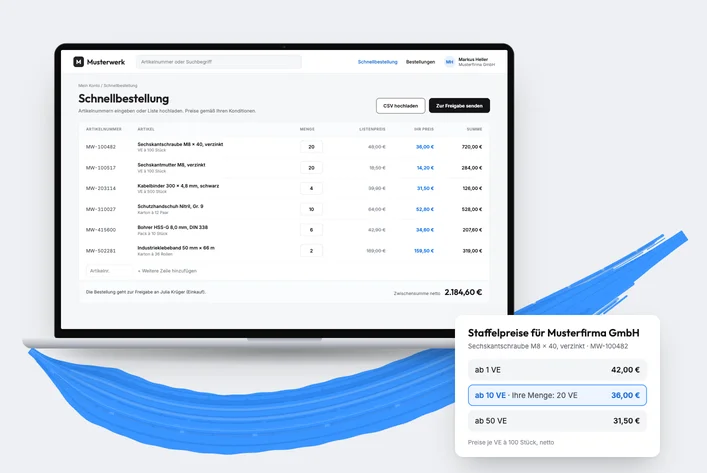
Laptop mit B2B-Schnellbestellung und kundenindividuellen Preisen, daneben eine Karte mit Staffelpreisen für einen Firmenkunden

Shopware for B2B

B2B is currently the strongest reason to choose Shopware. Customer-specific pricing, product catalogues with hundreds of thousands of items, approval workflows and a robust ERP integration are covered by the B2B Components together with the Rule Builder – features you would have to buy as extensions or build yourself in other systems.

This shifts the effort to where it belongs: data quality and interfaces. You can read in detail how we set up migration, integration and operations in the services of our Shopware experts.

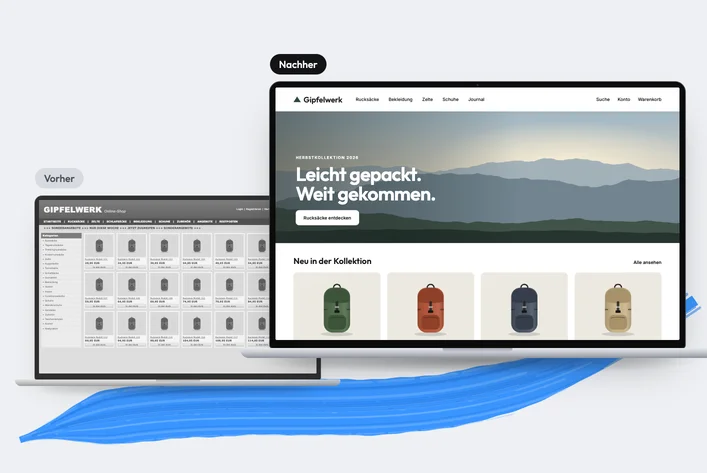
Vorher-nachher-Vergleich: veralteter Onlineshop auf einem kleinen Laptop und neu aufgebauter Outdoor-Shop auf einem großen Laptop

Migration: Shopware 5, Magento and other systems

Moving from Shopware 5 to Shopware 6 is not an update but a new implementation with data migration – the two systems don't share a common codebase. Shopware provides a migration tool that transfers products, categories, customers and orders. The same tool also supports switching from Magento.

What it doesn't transfer: templates, plugin logic and everything that has moved into custom development over the years. That is exactly where the effort and risk of a migration lie – and exactly why an honest assessment before the project starts pays off.

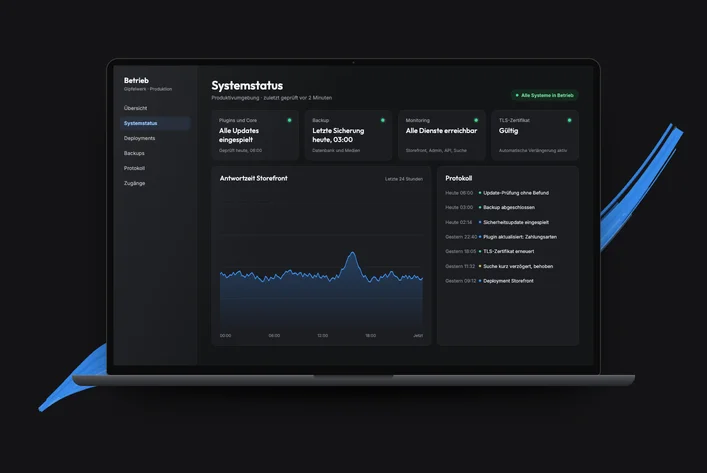
Dunkler Laptop mit Systemstatus eines Onlineshops: Updates, Backup, Monitoring, TLS-Zertifikat und Antwortzeit-Diagramm

Security, hosting and compliance

Shopware's hosting environments meet SOC 2 Type II, the company is ISO 27001 certified and GDPR compliant. Data is encrypted at rest with AES-256 and transmitted via TLS. The AI infrastructure behind Copilot runs in European data centres.

With self-hosting, this applies only to the software, not to your operations: patch levels, backups and monitoring remain your responsibility – or that of your service provider.

Who Shopware is right for

Shopware is a good fit if at least one of these applies:

  • You sell B2B, B2C or both from one system.

  • Your pricing and assortment logic is too complex for a pure SaaS shop system.

  • You need an ERP, PIM or CRM backend connected in production, not just exported to.

  • Data sovereignty and hosting in Europe are a hard requirement.

  • You want to be able to decouple frontend and backend in the future without going headless today.

If you're starting with twenty products and no backend integration, Shopware is oversized. We'll tell you that in the first conversation, too.
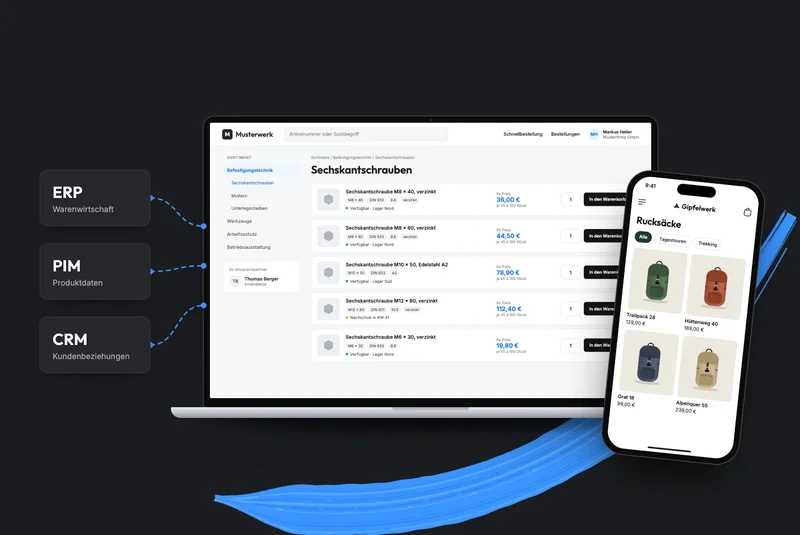

ERP, PIM und CRM angebunden an einen B2B-Shop auf dem Laptop und einen B2C-Shop auf dem Smartphone, verbunden durch einen blauen Pinselstrich

Our Recent Shopware Projects

Discover how we use Shopware to implement flexible, scalable, and user-centered e-commerce solutions.

Shop Usability Award Nominated Badge

Praxisdienst

Praxisdienst is a leading German online supplier of practice supplies and medical devices, serving doctors, therapists and clinics. We migrated its established OXID shop to Shopware 6 while it kept running, connected it to ERP, PIM and Praxisdienst’s own systems, and implemented the B2B logic for international trade. A dedicated B2C shop followed shortly after.

  • Migrating an established OXID shop to Shopware 6 without stopping sales

  • Numerous custom features that build on each other and had to be moved in a fixed order

  • Complete transfer of customer history, orders, shopping lists and content

  • ERP integration with country-specific tax logic and VAT ID validation for international B2B

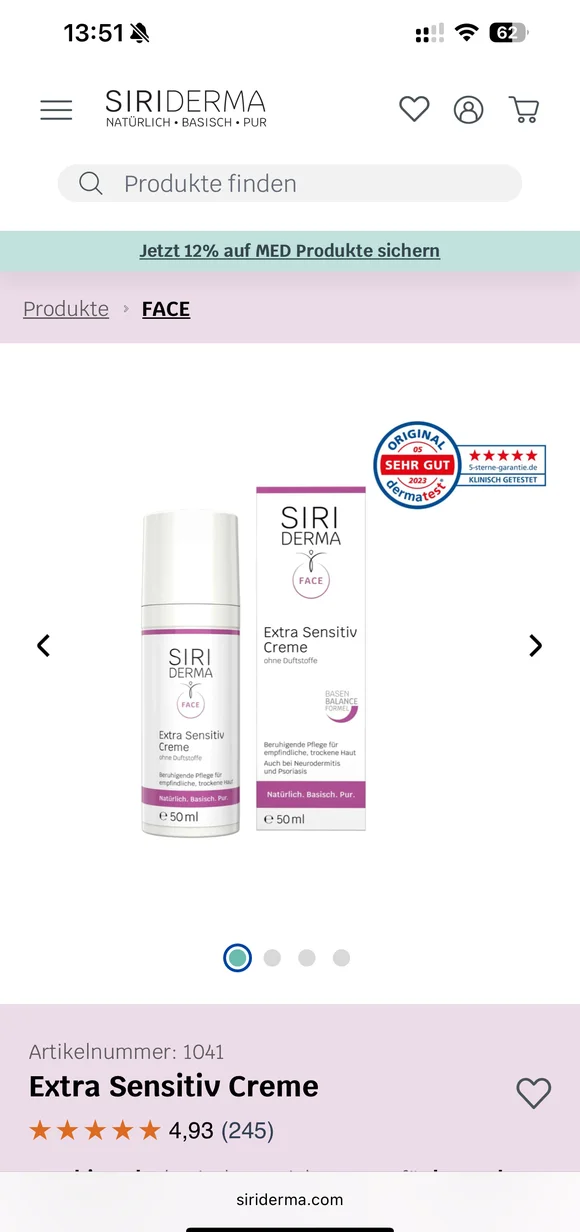
Siriderma mobile e-commerce interface displaying Extra Sensitiv Creme product page for sensitive skin care

Siriderma

Siriderma is a German brand of alkaline skincare products focused on highly tolerant formulas free of fragrance and irritants. It provides solutions particularly for atopic dermatitis, psoriasis, and rosacea.

  • Consultation-intensive products require comprehensive customer guidance

  • Provide detailed information on ingredients and application

  • Offer personalized recommendations based on skin type and medical needs

  • Support customers in selecting suitable products

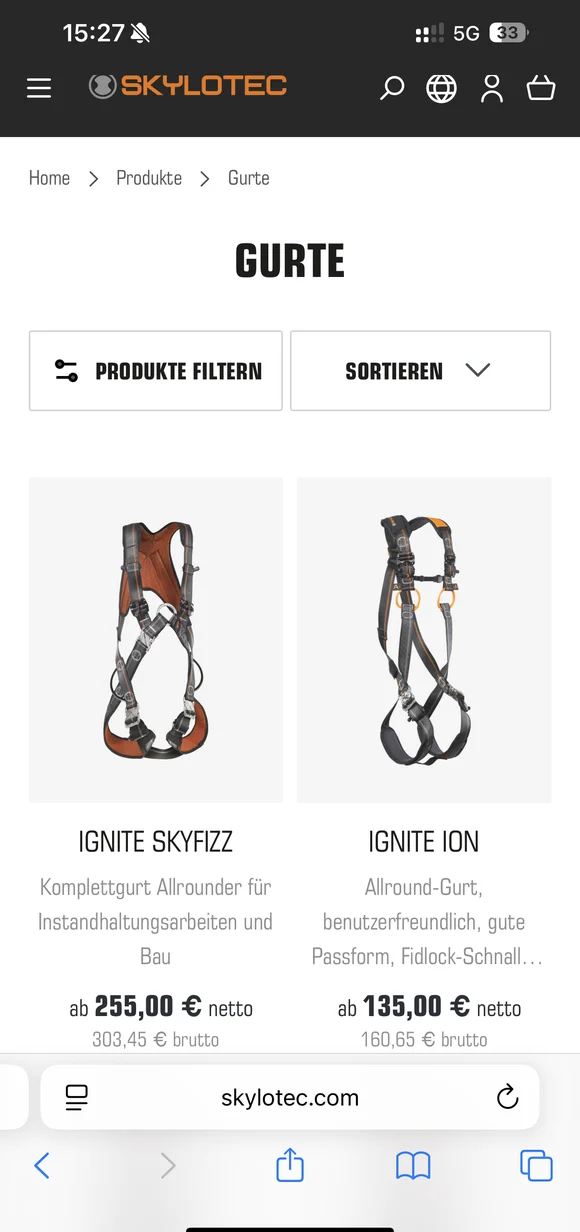
SKYLOTEC mobile e-commerce interface displaying a product listing for safety harnesses, featuring the "IGNITE SKYFIZZ" and "IGNITE ION" models with pricing and technical category details

Skylotec

Skylotec is an international provider of fall protection, climbing and safety equipment “Made in Germany”. We moved its shop from Magento to Shopware 6 Evolve, with two B2B channels and one B2C channel, in five languages and for markets from Europe to Australia. ERP, PIM and a media service are connected, and the shop is operated jointly with Skylotec’s DevOps team.

  • Three sales channels – two B2B, one B2C – with their own pricing logic in one Shopware shop

  • Customer-specific pricing across hundreds of customer groups without slowing performance

  • Connecting the ERP (Microsoft Dynamics), PIM (novomind iPIM) and media service so that their data models fit Shopware

  • B2B features such as request for quote (RFQ) and quick order

  • Dynamic high-end frontend with peak performance

Looking for a Shopware agency for your project?

From the first workshop to go-live and beyond: as a Shopware Gold Partner, we plan, build and support Shopware shops for B2B and B2C – including ERP and PIM integration, migrations and custom extensions.

Frequently asked questions about Shopware

The Community Edition is open source under the MIT licence and free to use. Costs arise from hosting, implementation, extensions and – with the paid plans – the licence, which is priced based on gross merchandise value (GMV).

Benedikt, Director Partnership and Growth

Would You Like to Talk About Your Shopware Project?

Planning a new Shopware setup, a relaunch, or the next growth phase?

Let’s take a focused look at your requirements and see how Shopware can support them.

Benedikt Merl

Director Partnerships & Growth