UX vs. CX in E-Commerce: Why E-Commerce Success Lives Behind the Frontend

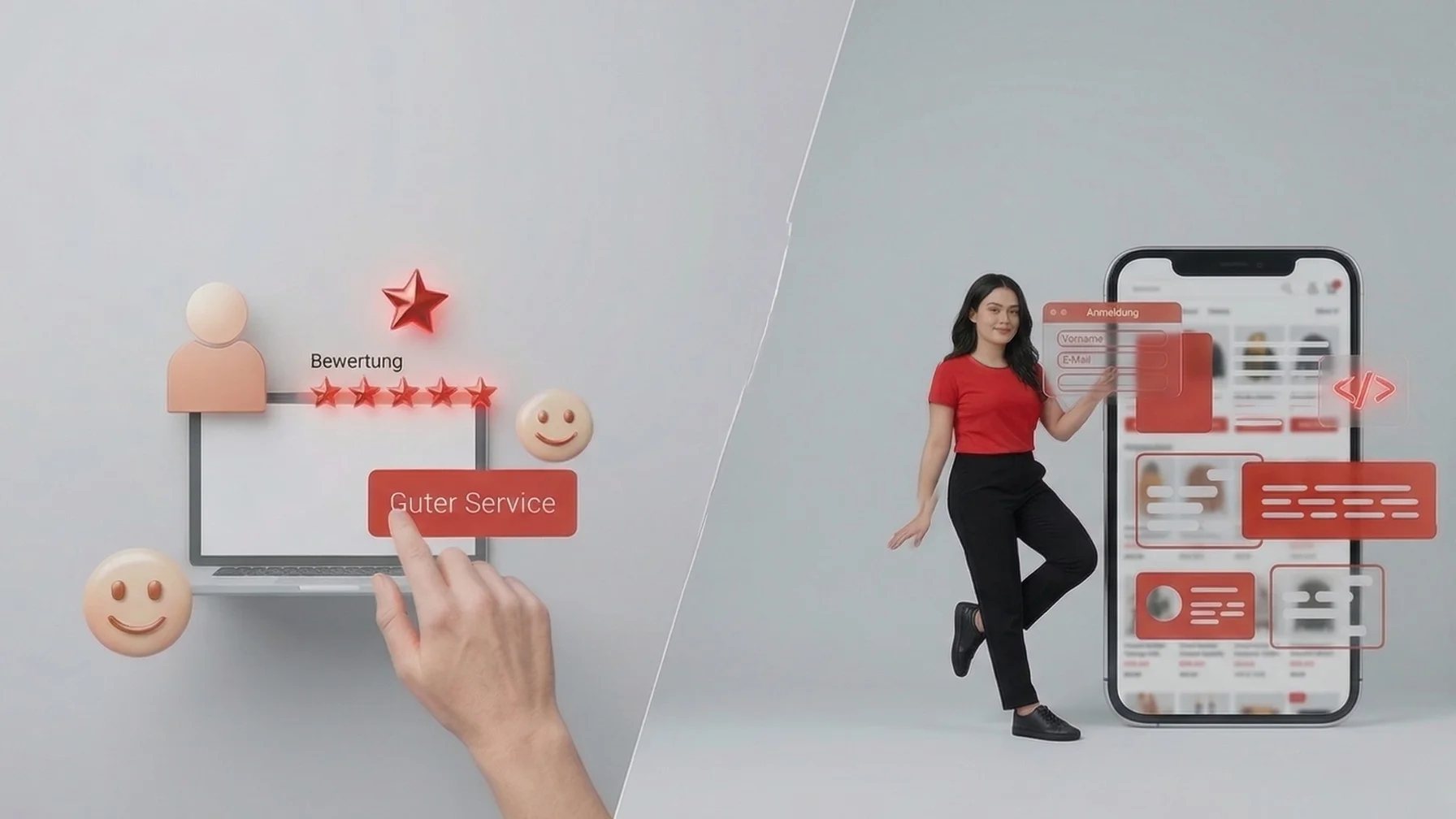
Optimizing your interface but still losing customers? Many e-commerce teams invest heavily in User Experience (UX): sleeker designs, faster checkouts and intuitive navigation. Yet, conversion rates often plateau. When this happens, the culprit is rarely the UX itself, but a common misconception: equating UX with Customer Experience (CX). By focusing solely on individual touchpoints rather than the holistic journey, companies leave significant revenue on the table.
Everyone Says CX — But They Mean UX
While Customer Experience (CX) is a popular buzzword, most organizations are actually talking about User Experience (UX). This isn't usually intentional; it’s a byproduct of established silos and a lack of clear definitions.
UX is tangible: You can see an improved interface, a better-placed button, or a faster load time immediately.
CX is abstract: It spans multiple touchpoints and is heavily influenced by factors outside the visible interface.
Furthermore, different teams own different parts of the journey. Design, Marketing, IT, and Customer Service each optimize their own "silo" without a shared vision of the overall experience. The result? Everyone is working on the experience, but no one is holistically responsible for it.
UX: Perfect Buttons, Better Clicks — Only Half the Story
UX focuses on the direct interaction between a user and a system. In e-commerce, this means the moments a customer actively engages with the shop:
Navigation and Search
Product Detail Pages (PDPs)
Checkout Flows
Mobile Usability
The goal is to eliminate friction and make the path to purchase seamless. However, UX is inherently local. Even a flawless interaction doesn't tell you how the customer feels about the brand once the virtual interaction is finished.
CX: The Brand Experience is the Big Picture
CX broadens the lens. It covers the entire end-to-end journey - from initial brand awareness to purchase, delivery, product usage and long-term loyalty. Customers don't care if a ball was dropped by marketing, IT or logistics; they only care about the result.
CX is systemic, not isolated. It includes:
Marketing (Ads, Newsletters)
The Onsite Experience (UX)
Order Fulfillment & Logistics
Customer Support & Returns
Retention & Repurchase
CX doesn’t live in the frontend; it is the result of how data, systems, and organizational processes harmonize. You cannot optimize CX in a vacuum.
The Fatal E-Commerce Mistake: Only thinking in Touchpoints, Not Journeys
A classic error is "tweaking" individual stages as if they exist in isolation. You might have a high-converting product page and a smooth checkout, but if delivery windows are vague or customer service is unreachable, the journey collapses.
For the customer, this feels like a rollercoaster of high and low points rather than a premium shopping experience. Therefore, UX ensures the interaction works, while CX ensures the experience lasts.
Why Good UX Can Still Result in a Bad Experience
A shop can feel "perfect" and still bleed customers. Although the interface looks great, invisible weak points in the background often sabotage success:
Outdated Data: Contradictory product info across channels.
Broken Promises: Shipping delays that contradict onsite claims.
Siloed Teams: Customer service has no visibility into the order's history.
Ultimately, an interface can only be as effective as the systems supporting it. When data is messy or support is disconnected, the design feels like an empty promise. It serves as a reminder that: "Good UX is visible; good CX is noticeable".
From Screen Optimization to Journey Thinking
To win, you must stop obsessing over screens and start mapping journeys. This requires a fundamental shift in perspective:
Think Journey, Not Touchpoint: Don't just ask "How do we fix the product page?" Ask "How does the customer feel from discovery to unboxing?"
Integrate Your Ecosystem: Consistent CX requires PIM, CMS, Commerce, and CRM systems to speak the same language.
Map the Friction: Identify where information gets lost and where customer frustration begins.
Measure Beyond the Click: Track end-to-end satisfaction and repurchase behavior, not just bounce rates and CTRs.
The 4 Most Common CX Pitfalls
Isolation: Optimizing UX without considering the broader journey.
No Strategy: Lacking a defined CX roadmap for e-commerce.
Tech Debt: Underestimating how fragmented systems kill the experience.
No Ownership: Having no one responsible for the "big picture."
Conclusion
UX starts the conversation; CX earns the loyalty.
The debate between UX and CX is more than semantics; it dictates where you point your levers for growth. UX is a critical tool, but it only reaches its full potential when integrated into a holistically conceived customer journey.
Companies that bridge this gap don’t just change their interfaces - they change their entire approach to commerce, building the foundation for sustainable, long-term success.
Ready to bridge the gap between UX and CX?
Discover our approach to Customer-Experience-Driven Commerceand learn how we help brands build holistic, high-performing platforms.