Between AI, Customer Experience, and Platform Strategy: Our Key Takeaways from K5 2026

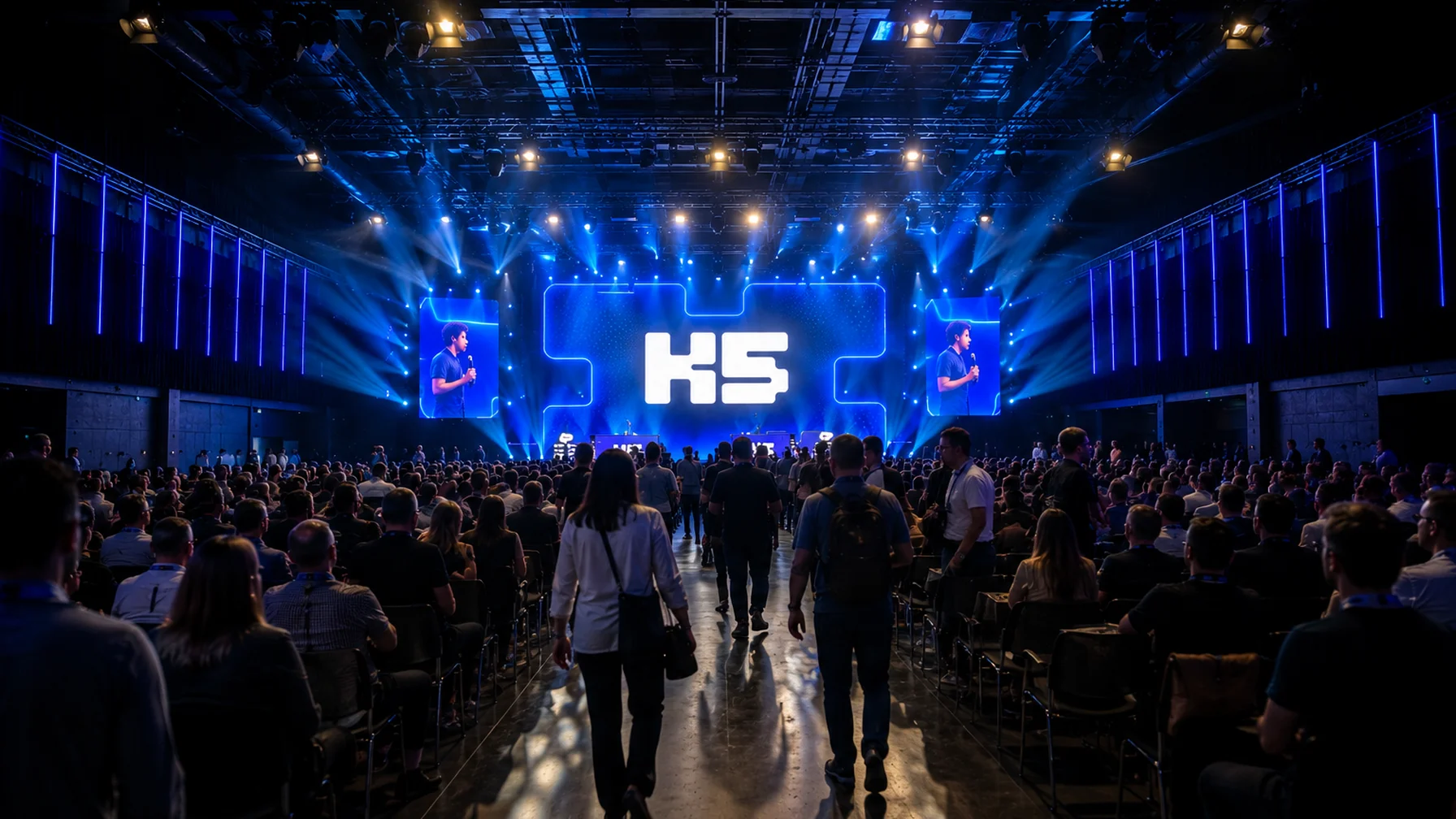
For years, K5 has been one of the most important events for digital commerce in the DACH region. In 2026, the conference once again served as the ultimate meeting point for retailers, brands, tech providers, and digital decision-makers. Walking through the halls or listening to the panel discussions made one thing instantly clear: the challenges in commerce aren't getting any smaller. At the same time, massive new opportunities are emerging — driven particularly by Artificial Intelligence, shifting customer expectations, and modern platform architectures. For us, K5 was above all a fantastic opportunity to contextualize current developments, exchange experiences, and look ahead at the topics that will keep businesses busy in the coming years. Which themes defined K5 2026? Which trends will keep commerce teams on their toes over the coming months? And what are the strategic consequences for businesses? Here are the five key takeaways we brought home from K5 2026.
1. AI Evolves from an Experiment into the Operating System
If there was one topic omnipresent at K5 2026, it was AI.
However, the shift from previous years was palpable. Just a year ago, the conversations were mostly about potential. Today, it’s all about concrete use cases and measurable results.
The most frequently discussed areas included:
AI Agents
Business process automation
Product data management
Content creation
Customer service
Search and discovery
Personalization
The narrative has fundamentally shifted. The exciting question is no longer if companies should deploy AI, but where AI delivers real value and how it can be seamlessly integrated into existing workflows.
The concept of Agentic Commerce was highly visible across multiple stages. This refers to AI systems that don't just generate recommendations, but autonomously take over tasks, prepare decisions, or even execute them.
The takeaway for commerce teams: AI is rapidly evolving from a mere tool into a core platform component.
2. Customer Experience Becomes More Diverse and Significantly More Complex
While Customer Experience (CX) was nothing new at K5 2026, it ran like a common thread through almost every presentation and conversation.
The difference today is that CX has become incredibly multifaceted. A few years ago, the focus was mostly on UI/UX design, usability, or conversion rate optimization (CRO). Today, the customer experience is shaped at significantly more touchpoints along the entire customer journey.
This includes:
Personalized content
Intelligent product recommendations
AI-powered interactions
Consistent brand experiences across various channels
Fast and relevant information delivery
Trustworthy digital experiences
At the same time, customer expectations continue to skyrocket. Consumers no longer compare you just to your direct competitors, but to the best digital experiences they encounter anywhere in their lives.
As a result, CX is increasingly becoming a discipline that bridges technology, data, processes, and brand management. Our observation at K5: The companies currently seeing the most success do not treat CX as a one-off project, but as a continuous strategic imperative.
3. The Customer Journey Splinters Across More Digital Touchpoints
Another central theme of K5 2026 was the question of where purchase decisions will actually be made in the future.
The answer is growing more complex. While a brand's own online shop remains a vital piece of the digital commerce puzzle, more and more touchpoints are shifting into external ecosystems.
The most intensely debated developments included:
Social Commerce
The Creator Economy
Community-driven purchasing decisions
AI-Driven Commerce
GEO Commerce (Generative Engine Optimization)
Particularly, AI-Driven Commerce is fundamentally altering how users discover products. Recommendations are increasingly generated by AI assistants, smart search systems, and automated buying processes.
In parallel, GEO Commerce is rapidly gaining traction. In the near future, products won't just need to be visible to traditional search engines, but also to generative AI systems that influence purchasing decisions and product recommendations.
Our key insight: The online shop remains relevant, but it is less and less frequently the place where the customer journey actually begins. For businesses, this means thinking about commerce in a much more channel-agnostic and platform-independent way.
4. Why Modern Commerce Architectures Are Becoming a Business Priority
For us, this was arguably the most critical takeaway of the entire event.
Most of the trends discussed ultimately lead to the exact same challenge: businesses must be able to react to changes much faster. New AI applications emerge on a monthly basis, new sales channels gain traction overnight, customer expectations shift continuously, and business models keep evolving.
The decisive question is therefore: How fast can an organization react to these changes?
Based on our project experience, the answer rarely depends on individual features, but rather on the underlying platform architecture. Today, modern commerce platforms require:
API-first approaches
Deep integration capabilities
Modular systems
Flexible extensibility
A long-term scalable architecture
This explains why topics like Composable Commerce, best-of-breed approaches, and modern platform strategies took center stage on many panels. If you want to deploy innovations rapidly, you need a technological foundation that enables change rather than preventing it. This is precisely where we currently see the greatest strategic leverage for many companies.
5. Hallway Tracks and Coffee Breaks Were Just as Exciting as the Keynotes
As valuable as the stage presentations were, many of our most interesting insights came from the conversations in between. Whether over coffee, in the hallways, or during the evening networking events, many companies are currently grappling with the exact same questions:
How can AI be meaningfully integrated into existing processes?
How do we modernize legacy systems?
How can we shorten time-to-market?
How can business departments and IT work together more successfully?
Which technology decisions will prove sustainable in the long run?
What became entirely clear is that commerce executives are currently looking for less hype and more direction. Technology decisions are increasingly evaluated through a strategic lens. Companies want to understand which investments create long-term competitive advantages and which are merely chasing short-lived trends.
This is exactly what makes events like K5 so valuable: they create a space for open exchange, diverse perspectives, and honest discussions about the realities of running a modern commerce organization.
On a Personal Note: Nominated for the K5 Commerce Award
K5 had another special highlight in store for us this year. We were nominated for the K5 Commerce Award in the Agency of the Year category.
While we didn't take home the final trophy, we are incredibly proud of the nomination — being the best out of 5. For us, it is a fantastic recognition of the hard work put in by our team, our clients, and the collaborative projects we've been privileged to bring to life over the past few years.
Sometimes, just being nominated is a wonderful validation that you are on the right path.
Summary
Commerce is Becoming Smarter, More Complex, and Highly Strategic
This K5 2026 recap highlights one reality above all: the core themes of digital commerce are more interconnected than ever.
AI is reshaping processes and business models. Customer Experience is evolving. The customer journey is fracturing across an increasing number of digital touchpoints. And modern commerce architectures are becoming the absolute foundation for future innovation.
For commerce leaders, this creates a clear directive: technology decisions today must not only satisfy current requirements but must also build in the agility needed for future developments. Those who view platform strategy, customer experience, and AI as a unified ecosystem will build the prerequisites to grow successfully in the years to come.
We are excited to see which of these trends we will encounter again at K5 2027—and what new topics will have joined them by then.