Generative Engine Optimization (GEO) Starts with Clear Content

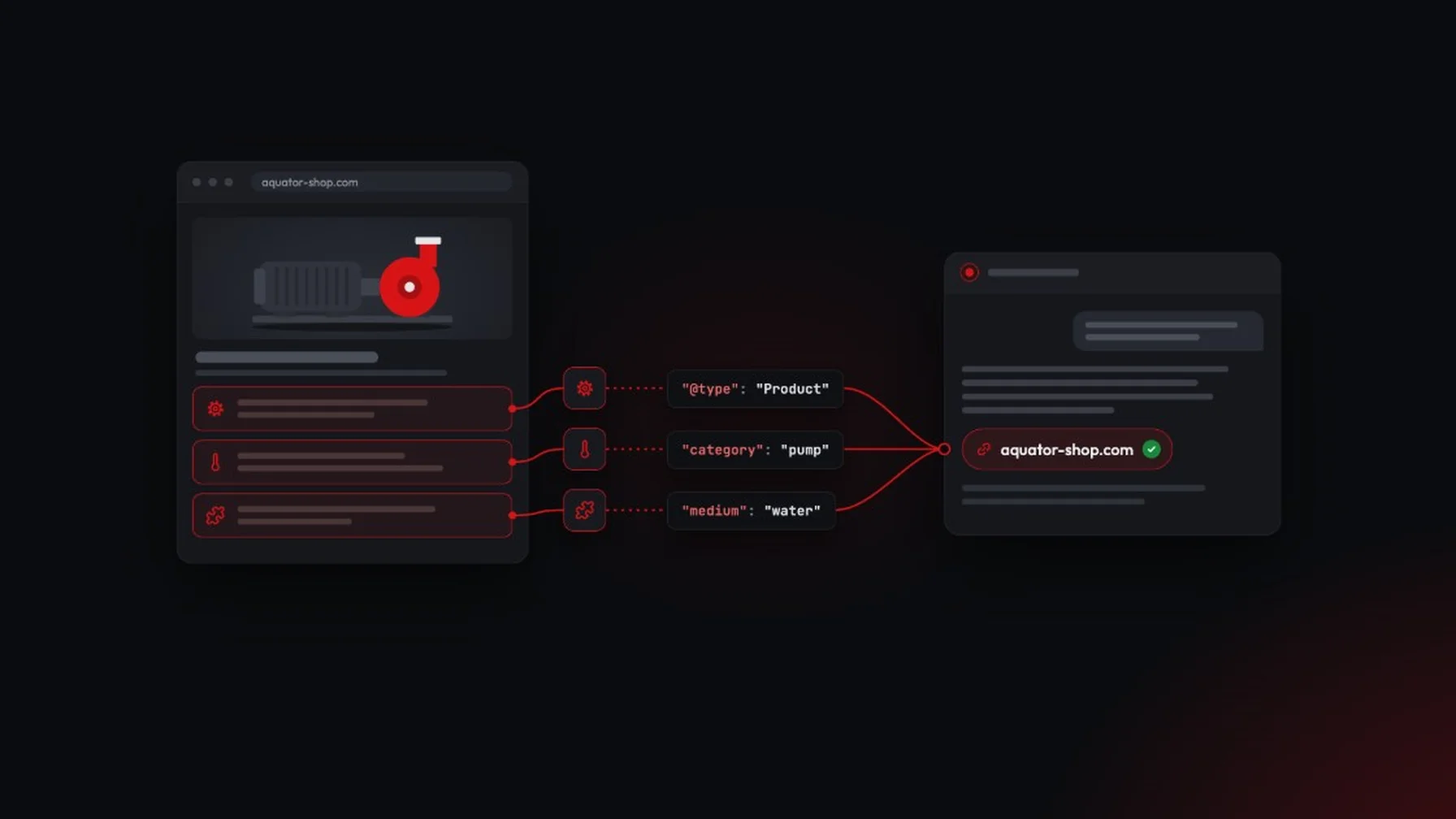 AI generated
Generative engine optimization (GEO) starts with clear content. Learn how AI search finds and cites your site, and how to improve your visibility.
Generative engine optimization (GEO) is the practice of optimizing content and technical accessibility so that AI-generated answers accurately represent your business or cite your website as a source. For businesses, this raises an additional question: can search systems tell what your offering is actually suited for?
GEO aims to ensure that a business is accurately represented and cited as a source in AI-generated answers. It does not replace traditional SEO; it builds on its foundations. Google explicitly confirms this connection for its generative search features.
For your commerce website, the practical takeaway: check whether your pages are accessible and informative before you spend budget on supposed AI shortcuts that promise better AI search visibility.
In this article, we look at:
Why AI visibility matters for purchasing decisions.
How content moves from crawling to being cited as a source.
What technology, product data and editorial teams each need to do.
How to track progress and spot unsupported promises.
Generative engine optimization (GEO) starts before the click
An AI search system retrieves information from search indexes and, in some cases, other sources, then uses it to generate an answer. Google AI Overviews and AI Mode may run several related searches to do this, exploring a complex question through different subtopics.
Imagine a technical buyer asking: “Which pump is suitable for this medium and can be integrated into our plant?” A useful answer would need to bring together operating conditions and technical limitations. For a retailer, that means its product pages need to provide exactly this kind of information.
The strategic implication: when assessing visibility, also look at whether your business appears accurately in answers to relevant purchase-decision questions. A brand mention alone says little about its business value.
Terms such as AI search optimization, GEO SEO and SEO for AI describe this field from different angles. AEO, short for Answer Engine Optimization, and LLMO, or Large Language Model Optimization, are used for related and sometimes overlapping concepts. There is no need to treat them as fixed categories when planning your project.
How does AI interpret my website content?
For a technical explanation, it helps to distinguish between discovery, processing and use. These steps do not necessarily happen only after someone asks a question.
Crawling is when a search system retrieves content. It may discover pages through links or sitemaps, for example. Indexing is the subsequent process of analyzing and storing information. During indexing, Google analyzes text, page titles and images, among other things. A page being found does not automatically mean it will be indexed.
Retrieval is the process of finding relevant information in response to a query. Retrieval-Augmented Generation (RAG) combines retrieval with answer generation: external information is provided to a language model as additional context. This allows it to use content beyond its training data.
Here, “understanding” is a simplified way of describing how a system processes language and relevant information. For example, it needs to identify which product is being described, which features belong to it and the conditions under which a claim applies. The answer is generated from the available context, so errors remain possible.
External search providers may also play a role in ChatGPT Search. OpenAI says it aims to select relevant and reliable results, but does not guarantee placement. Technical accessibility therefore does not guarantee a mention.
What GEO means for your commerce team
Our recommendation: treat GEO as a shared responsibility across development, product data and editorial teams. Developers check access. Subject-matter experts ensure claims are reliable. Editors turn that information into clear pages.
In B2B commerce, this means deciding which information should be publicly available to help buyers and which should remain in a protected customer area. Do not publish customer-specific prices or terms simply to give search systems more content.
Also define which system owns each piece of information. If technical specifications come from your PIM, the editorial team should not maintain a separate, independent version. This reduces conflicting statements and makes updates easier.
A useful acceptance question is: can a new buyer use this page to assess whether the offering is broadly suitable? That is a more tangible criterion than “AI-ready.”
In practice: product data needs context
For example, a retailer lists only the part number and product name for a spare part. But a buyer needs compatibility details. We recommend adding compatible model series, exclusions and a clear guide to choosing the right part.
The goal is to provide genuine value. Google explicitly recommends content based on first-hand experience and offering additional insight. Generic summaries and mass-produced pages targeting similar questions are not a sound content strategy.
Clear descriptions of your company, services and products help systems interpret your content. Being cited also depends on relevance and on how each AI system selects sources. Important details should therefore be available as accessible text. Structured data must match the visible content.
Check third-party sources for factual errors in information about your company, too. And do not confuse brand authority with paid mentions: Google explicitly warns against artificially generating mentions as an optimization tactic.
Structured data: making meaning machine-readable
Structured data is a standardized format for labelling the information on a page clearly, usually with the Schema.org vocabulary. Google describes it as explicit clues about the meaning of a page and recommends JSON-LD if your setup allows it.
For commerce pages, these types matter most:
Product and Offer: product name, image, price, currency and availability. For merchant listings in Google, name, image and offers are required; recommended properties include brand, category and GTIN.
Organization: clear information about your company, such as its name, logo and contact options.
BreadcrumbList: shows where a page sits in your product range.
Three rules that often get overlooked: The markup must accurately reflect the visible content, so don't mark up information readers can't see. Product markup should ideally be in the initial HTML, because Google says JavaScript-generated markup is crawled less often and less reliably, especially for changing prices and stock levels. And structured data makes a feature possible, but doesn't guarantee it.
Our recommendation: Generate the markup automatically from the same data source as the product page instead of maintaining it by hand. With a PIM such as Pimcore, you manage attributes, variants and translations in one place and deliver them consistently to your shop, feeds and markup. See how we set up these data models on our Pimcore agency page.
How to improve your website’s AI search visibility
Check actual access. Review your robots.txt file, indexing rules and your hosting infrastructure’s bot protection. OAI-SearchBot is relevant to ChatGPT Search; GPTBot relates to potential model training. You can control the two settings independently.
Test business-critical pages. Start with key category and service pages. Use Search Console’s URL Inspection tool to check what Google can access. Also review the settings that control access to generative search features in Search Console.
Address specific information gaps. Gather recurring questions from sales and support. Add operating conditions, limitations and verifiable differences to the relevant pages. This gives you a practical, reviewable task list instead of a vague content brief.
Validate your structured data. Test key page templates with the Rich Results Test and monitor the status reports in Search Console after go-live. Check that price and availability in the markup match the visible page.
Measure source visibility separately from business outcomes. Use Google’s generative AI performance report. You can track ChatGPT referrals using the
utm_source=chatgpt.comparameter. Also run regular spot checks with relevant questions and record the system, date, cited sources and factual accuracy each time.
Conclusion: clarity is part of the technical foundation
Generative engine optimization (GEO) connects discoverability with the question of whether your content can support a reliable answer. For Google, SEO fundamentals and helpful content remain the foundation.
Prioritize technical barriers and information gaps on pages that matter to your customers’ decisions. Ask for a clear rationale and verifiable results for every initiative.
Schedule regular checks. A citation is never guaranteed to last: answers and linked pages may vary depending on the query and the system used.
Frequently asked questions
How does ChatGPT find content on my website?
ChatGPT Search uses web search and may work with external search providers. To make your page content available in search answers, allow OAI-SearchBot and make sure your infrastructure does not block its access. This does not guarantee that your site will be cited.
How does AI decide which websites to cite as sources?
The selection depends on the AI search system and the query. OpenAI says its search ranking aims to surface relevant and reliable information. It does not publish a formula that would let you guarantee a citation.
What is the difference between SEO and GEO?
SEO improves discoverability and how your site appears in search engines. GEO also focuses on whether your content is included in generated answers and cited as a source. For Google, these search experiences still rely on its core search and quality systems.
Do I need an llms.txt file or a special schema for GEO?
llms.txt is a proposal for a machine-readable overview with context and links to further information. It is not required for Google Search or its generative features, and Google does not require a special GEO schema. The file does not replace accessible, helpful pages.
How can I measure my website’s visibility in AI search results?
Use available platform reports and analyze identifiable referrals to your website. Google provides a generative AI performance report; ChatGPT marks outgoing links with a UTM parameter. Supplement this data with documented answer tests, without treating individual results as a complete picture of visibility.