AI Recommends What It Understands: What Agentic Commerce Means for Online Shops
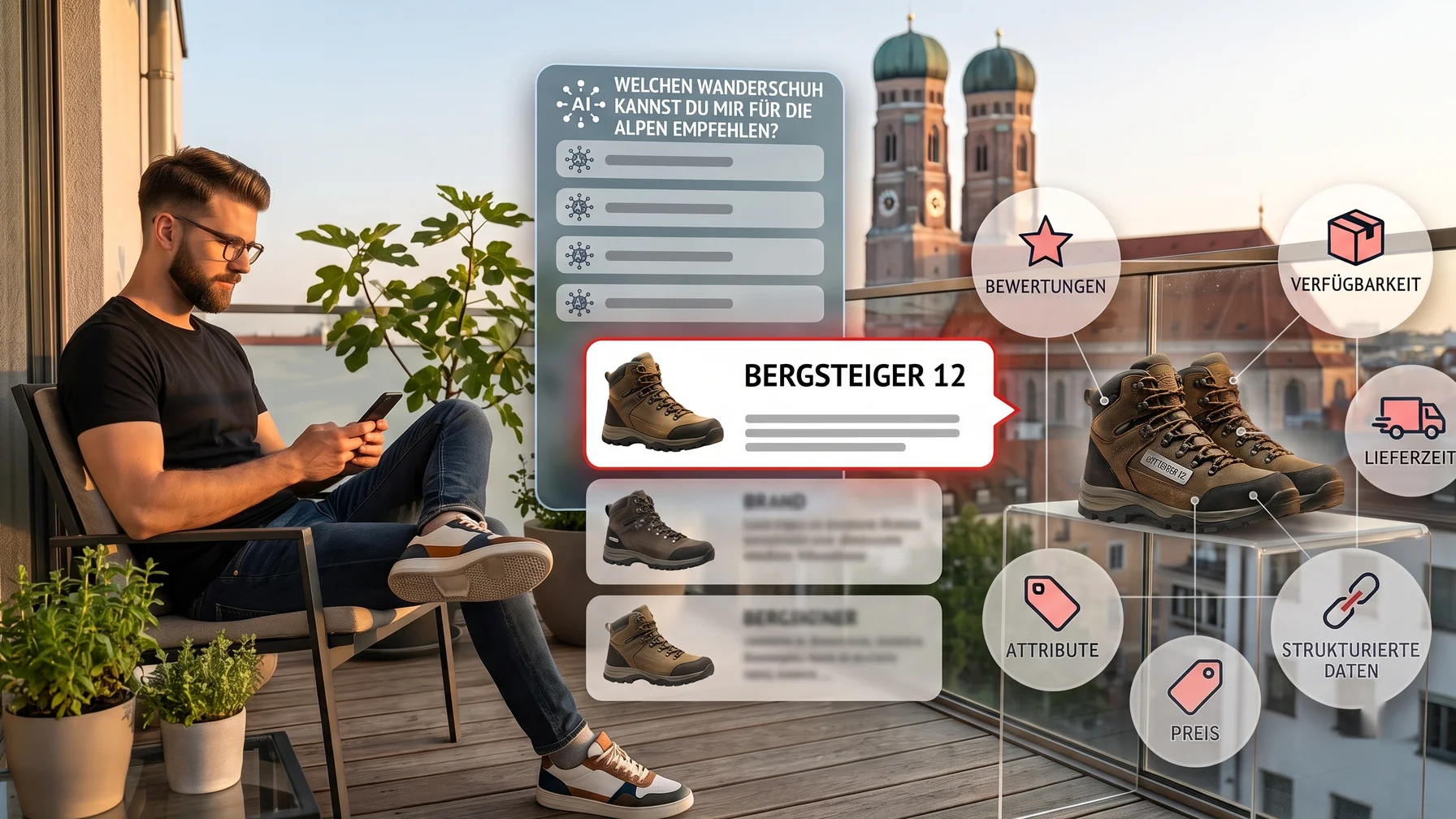
After Google, mobile commerce and social shopping, digital commerce is heading into its next major shift. This time it isn’t the path to the customer that changes — it’s the decision-maker.
Munich – July 2026 | For almost three decades, technology has kept rewriting the rules of digital commerce. Google made products discoverable for millions of people for the first time. The smartphone put shopping in everyone’s pocket. Social media and platforms like Instagram and TikTok turned content into sales channels. And with generative AI, search itself finally began to change from the ground up.
In the view of Munich-based e-commerce agency creativestyle, retail is now approaching its next stage of evolution. With what’s known as Agentic Commerce, AI systems increasingly search for, compare and assess products on their own — preparing purchase decisions before a person ever visits an online shop. The reach needed for this is already here: ChatGPT now counts around one billion monthly active app users¹, and Google Gemini around 900 million².
For businesses, that marks a fundamental shift in perspective. In future they won’t only compete for the attention of potential customers, but also for the recommendation of artificial intelligence. For creativestyle, this is the most profound change in digital commerce since the rise of search engines.
It’s not the channel that changes — it’s the decision-maker
Every major technological shift has redefined e-commerce. Google decided which products got found. Mobile commerce changed when and where people shopped. Social commerce made inspiration a fixed part of the customer journey.
With Agentic Commerce, for the first time it’s the actual decision-maker that changes. Increasingly, the customer journey no longer begins in an online shop or a search engine — but in a conversation with an artificial intelligence.
Anyone who today asks an AI assistant to find the right hiking boot, the best office chair or the perfect coffee machine no longer gets just a list of links. AI systems compare products, weigh up features, take reviews into account and make a pre-selection. The actual contact between retailer and customer often only happens once the purchase decision has largely been made.
Just how strong this influence already is tends to be underestimated. According to an analysis by Similarweb, people who are recommended a brand by ChatGPT are 2.5 times more likely to visit that brand’s website. Similarweb puts it in a nutshell: AI now owns the very start of the customer journey.
While many companies are currently focused on how to integrate AI into their own shop, creativestyle sees the real challenge somewhere else — one step earlier: how will products be found, understood and recommended by AI systems in the first place?
“Over the past 25 years, I’ve seen how first Google, then mobile commerce and finally social commerce each reshaped digital commerce. Agentic Commerce goes one step further: for the first time, it’s not just the path to the shop that changes, but the decision-maker itself. That’s why companies need to learn to be not only visible to people, but also understandable and trustworthy to AI systems,” says Jaromir Fojcik, founder and CEO of creativestyle.
The new target audience is called AI
For many years, digital marketing was built around persuading people. Search engine optimization, performance marketing, customer experience and content all followed the same logic: create attention, build trust and guide the user all the way to the purchase. That logic is now expanding.
Alongside the classic communication aimed at people, companies will also have to make their information understandable to machines. An AI doesn’t respond to emotional imagery. It analyzes structured product data, technical attributes, delivery information, reviews, availability and trust signals. It recommends the products it can clearly interpret and compare with one another.
Product data becomes the new visibility factor
In recent years, companies invested in performance marketing, search engine optimization and social commerce. With Agentic Commerce, an area that has often been treated as a technical obligation now moves center stage: product data. What was long seen as a backend topic is increasingly becoming a decisive competitive factor for marketing and sales.
Product attributes, technical data, schema markup, APIs, availability, ratings and consistent data models are what make it possible for products and brands to be found, understood and recommended by AI systems at all. This gives strategic weight to a topic that has often stayed in the background: data intelligence.
In future, simply collecting data will no longer be enough. Companies need to structure and connect their product, customer and transaction data so that usable information emerges from it. If an AI can’t read or find that data, only one basis for a decision remains: price, availability and/or delivery time. To avoid exactly that race to the bottom, data intelligence becomes the crucial link between commerce, marketing and AI.
“A few years ago, nobody wanted to talk about product data — today it decides digital visibility. Product data has suddenly become sexy. Because in future it’s no longer just the best campaign that counts, but the quality of the information an AI can understand and assess. Data structure, data quality and data intelligence are becoming one of the most important disciplines in digital commerce. Or, put simply: AI recommends what it understands,” says Jaromir Fojcik.
The online shop stays — but its role changes
Agentic Commerce doesn’t spell the end of the online shop. Its function does shift, though. Until now, the shop brought together almost the entire customer journey — from inspiration and advice through product selection to closing the sale. In future, AI agents could take over a significant share of those tasks. The shop remains the place for transaction, service, brand loyalty and fulfillment. But product selection increasingly begins outside the shop.
International technology companies such as OpenAI, Google, Perplexity and Amazon are already developing different approaches to agent-assisted shopping — from AI-powered product search to autonomous checkout processes. For creativestyle, this momentum makes one thing clear: Agentic Commerce is no longer a theoretical vision of the future, but is step by step becoming the next infrastructure of digital commerce.
Companies should lay the groundwork now
Agentic Commerce is still in an early stage of development. The direction, however, is clear: companies modernizing their commerce platforms today should already factor this shift in. Because anyone who only reacts once AI agents have become part of everyday life will have to build important foundations after the fact.
There are already signs that this preparation pays off: during the most recent Prime Day in the US, shoppers who used AI to search for products and deals achieved a 40 percent higher conversion rate than users of classic channels such as search, email and social media, according to Adobe. The biggest change in e-commerce, then, isn’t that an AI will do the shopping in future — it’s that brands will have to learn to convince not only people, but machines as well.
¹ Sensor Tower, State of AI 2026 Report
² Google, June 2026