Symfony Upgrade: Why You Should Move to 7.4 LTS Now

 AI generated
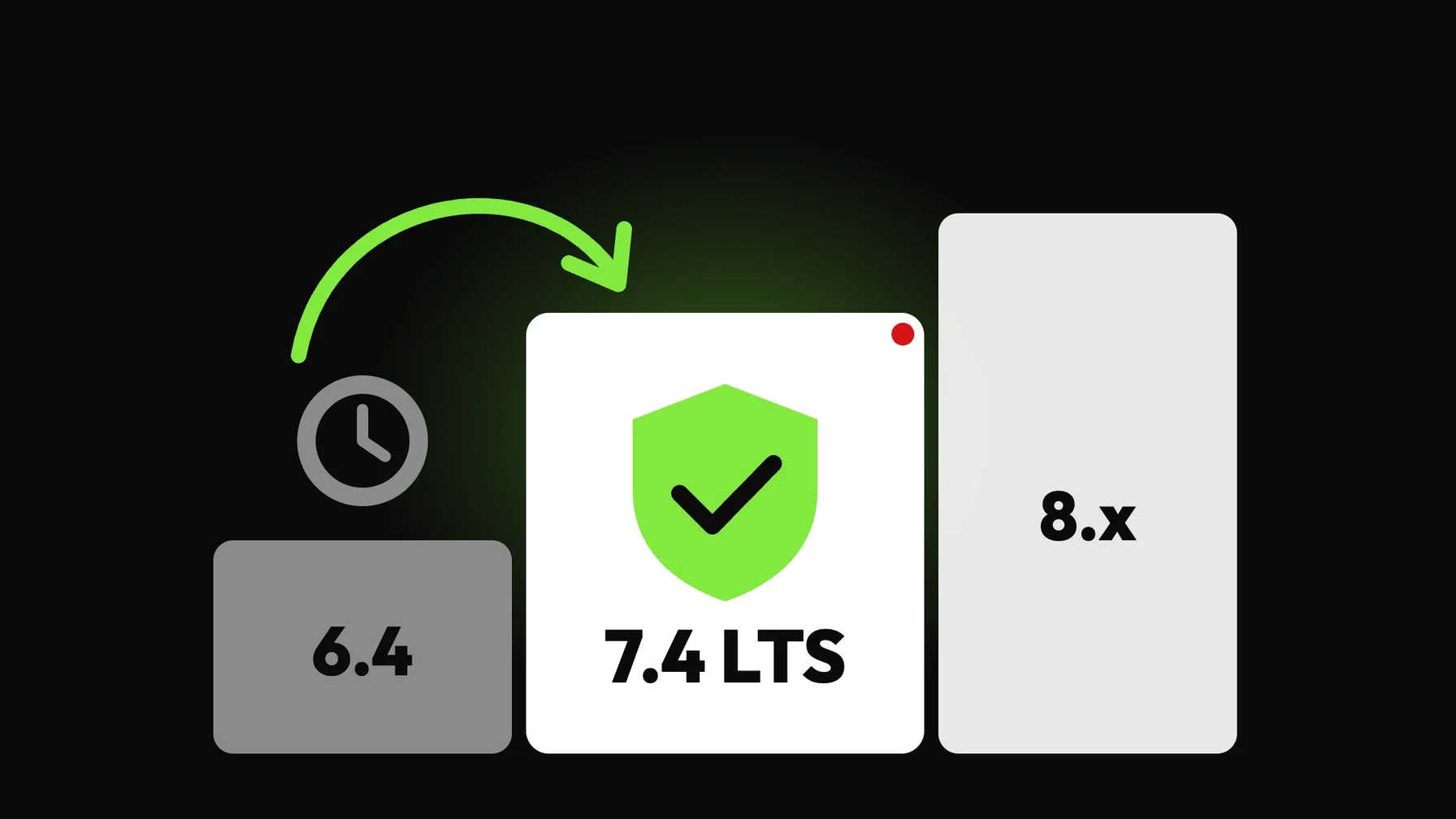
Symfony upgrade to 7.4 LTS: the release cycle, end of support for 5.4 and 6.4, the upgrade route via deprecations and why PHP has to move too.
Is your application still running on Symfony 6.4? Then now is a good time for the next upgrade. According to Symfony, bug fixes for 6.4 end in November 2026, with security updates until November 2027. That sounds like plenty of time, but a Symfony upgrade to a new major version needs lead time.
The target is Symfony 7.4 LTS. According to Symfony, this version receives bug fixes until November 2028 and security updates until November 2029. Switch now, and you're covered for years to come.
At a glance:
How the Symfony release cycle works
Which versions need an upgrade now
How to upgrade without disrupting operations
Why the PHP version matters too
How the Symfony release cycle works
According to its release policy, Symfony publishes a new minor version every six months, in May and November. A new major version is released every two years in November.
The last minor version of a branch is an LTS version (long-term support), such as 5.4, 6.4 or 7.4. It gets three years of bug fixes and four years of security updates. Standard versions, by contrast, are maintained for only eight months.
In practice: for applications meant to run for many years, LTS versions are the safe harbour. If you want to use new features early, you can go with the current minor versions, but you'll need to update more often.
Which Symfony versions need an upgrade now
According to Symfony, these dates apply:
Symfony 5.4 LTS: bug fixes have ended; security updates until February 2029.
Symfony 6.4 LTS: bug fixes until November 2026, security updates until November 2027.
Symfony 7.4 LTS: bug fixes until November 2028, security updates until November 2029.
Symfony 8.x: the current minor versions are each maintained for around eight months.
Older versions such as 6.0 to 6.3 or 7.0 to 7.3 no longer receive updates. If applications run on them, the upgrade is urgent.
How a Symfony upgrade works
Symfony has a strict backward compatibility promise. Within a branch, no minor update breaks existing code. Features that change are first marked as deprecated and only removed in the next major version.
That leads to the recommended route:
Update to the last minor version, for example from 6.2 to 6.4.
Fix all deprecation notices. Symfony shows them in the profiler and in the logs.
Move to the new major version, for example from 6.4 to 7.4.
Third-party bundles have to keep up. Check early whether each bundle supports the target version, and plan replacements for abandoned packages.
The catch: the more versions an application lags behind, the more deprecations pile up. Regular small upgrades cost far less than one big jump every few years.
The PHP version matters too
A Symfony upgrade is almost always a PHP upgrade as well. According to Symfony, version 7.4 needs at least PHP 8.2, and the 8.x versions at least PHP 8.4.
According to php.net, PHP 8.2 only receives security updates until 31 December 2026. So plan directly for PHP 8.4 or 8.5, which are supported for longer. PHP 8.1 and older no longer receive any updates.
What this means for your team
An upgrade isn't purely a technical topic. It needs test coverage so errors surface early, and an environment where the upgrade can be prepared independently of live operations.
Our recommendation: plan upgrades as a fixed part of maintenance. A minor upgrade every six months and an LTS switch every two years keep the effort small and the application secure.
Conclusion: the Symfony upgrade to 7.4 LTS pays off now
With bug fixes for 6.4 ending, now is the right time for the Symfony upgrade to 7.4 LTS. The version is covered until 2029.
If you follow the recommended route via deprecations, you can switch without disrupting operations. What matters are tests, up-to-date bundles and a suitable PHP version.
As a Symfony agency, we upgrade applications to Symfony 7.4 LTS or 8.x. SensioLabs, the publisher of Symfony, is a creativestyle brand.
Frequently asked questions
How long is Symfony 6.4 supported?
According to Symfony, 6.4 LTS gets bug fixes until November 2026 and security updates until November 2027.
Which Symfony version should I use?
For long-lived applications, the current LTS version, Symfony 7.4, is the recommended choice. According to Symfony, it receives security updates until November 2029.
How much effort is an upgrade from Symfony 6.4 to 7.4?
That mainly depends on the number of deprecations and the bundles in use. According to Symfony, if you fix all deprecation notices under 6.4, you can move to the new major version without further changes.
Which PHP version does Symfony 7.4 need?
According to Symfony, at least PHP 8.2. Because PHP 8.2 drops out of support at the end of 2026, plan directly for PHP 8.4 or 8.5.