How AI Virtual Try-On Solves the Most Expensive Problem in Fashion Commerce

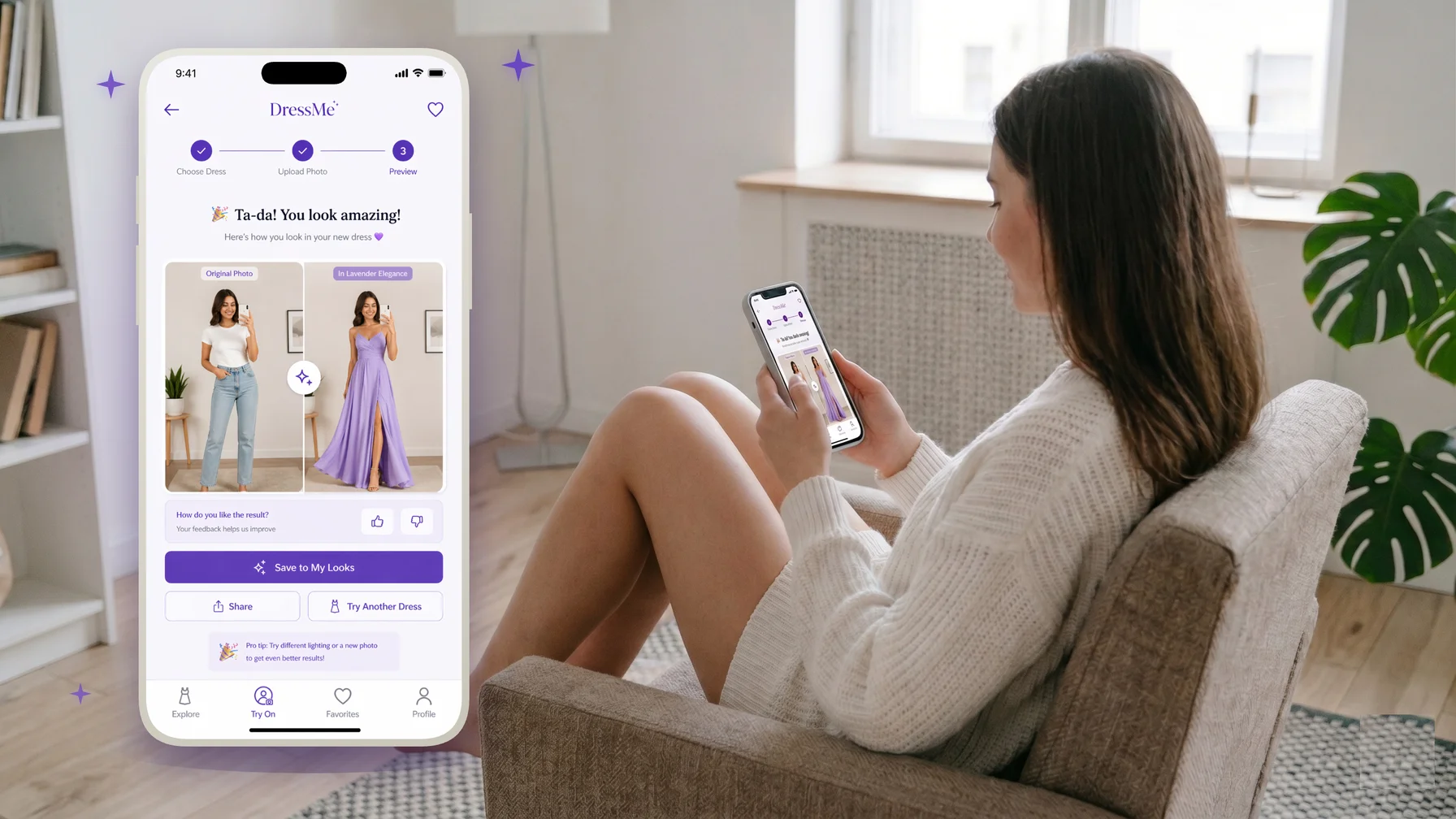
Why Virtual Try-On is Currently Reinventing Fashion E-Commerce For a long time, fashion e-commerce has faced a fundamental problem that was never truly solved. Customers online see flawless product images, elaborately staged campaigns, and models under ideal lighting—but they never see themselves wearing the product. This single limitation continues to drive the biggest challenges in digital fashion retail today: purchase hesitation, high return rates, and shopping carts abandoned right before checkout. At the end of the day, shoppers always ask themselves the exact same question: "How will this actually look on me?" This is precisely where AI is changing the rules of the retail game. With modern virtual try-on technologies, users simply upload a smartphone selfie and, seconds later, see a photorealistic preview of how an outfit looks on them—complete with accurate fit, fabric drape, and color. What looked like a futuristic tech demo just a few years ago is rapidly evolving into one of the most exciting innovations in e-commerce. Crucially, AI Virtual Try-On isn't just a gimmick; it measurably drives conversions, slashes return rates, boosts customer loyalty, and elevates brand perception.
The Digital Fitting Room Suddenly Becomes Reality
The next generation of AI commerce no longer feels like traditional online shopping—it feels like a personal digital stylist. With AI Dress Me, creativestyle transforms classic fashion stores into interactive AI commerce platforms. Customers can try on outfits directly online: realistically, intuitively, and without needing an extra app—right inside your existing shop.
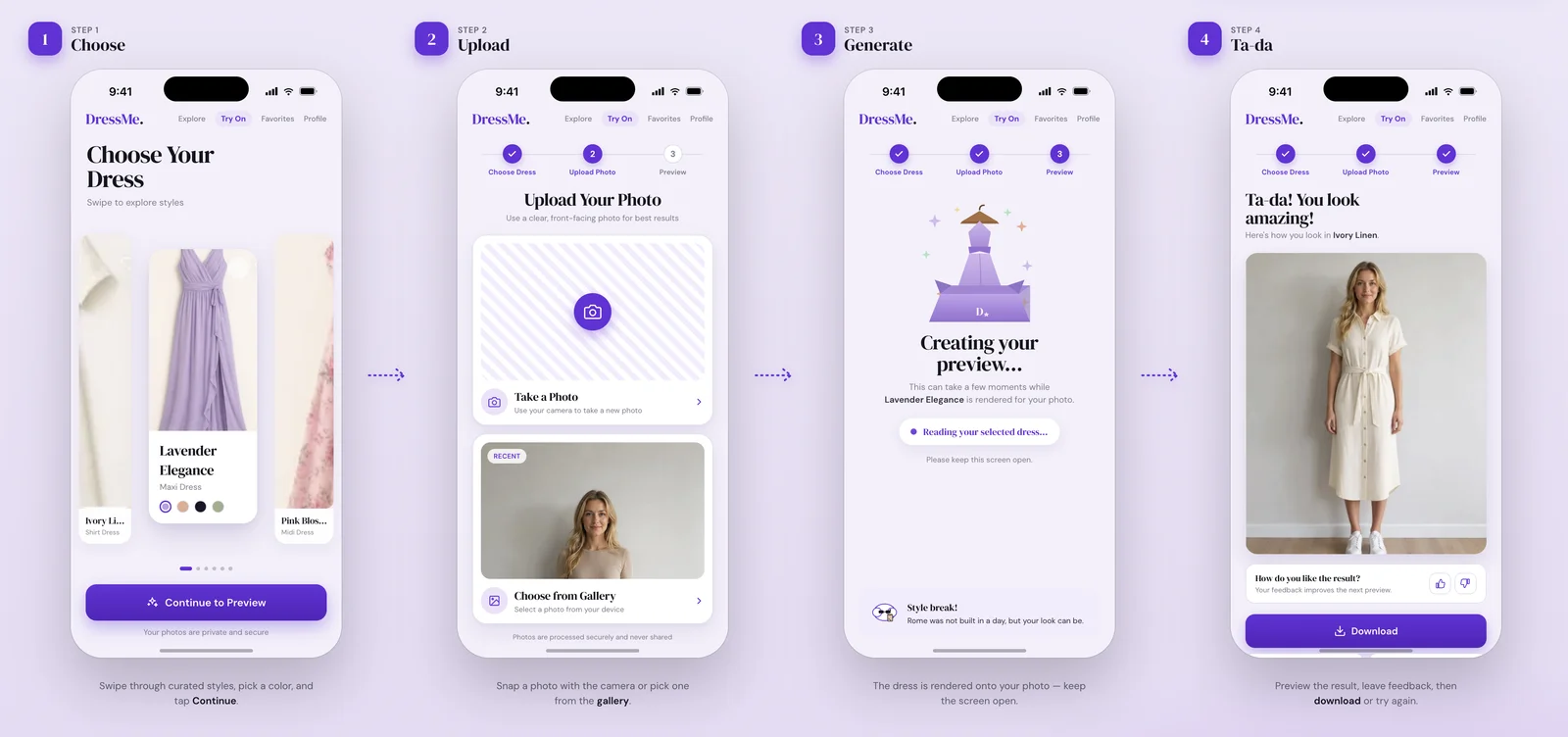
The underlying process is remarkably simple:
The user clicks "Virtual Try-On" directly on the product detail page.
They upload a quick selfie.
The AI takes care of the rest.
In the background, the system analyzes:
Body posture
Perspective
Lighting conditions
Silhouette
Fabric movement
Fit
The AI then seamlessly projects the garment onto the user's image. The result looks like a professional fashion shoot.
This very moment fundamentally transforms the customer experience. Instead of viewing products on heavily retouched and airbrushed models, customers experience them directly on themselves.
How AI Dress Me Works
The goal is to integrate the virtual fitting room seamlessly where purchase decisions are actually made: directly on the product detail page. For customers, the experience feels incredibly straightforward.
A single click on "Virtual Try-On" is all it takes to snap and upload a selfie or use an existing photo. Within a few seconds, the AI analyzes body posture, perspective, and fabric behavior to generate a realistic preview of the outfit on the user's own body.
What makes this experience so compelling is how naturally it fits into the shopping flow. Users can switch between different colors, test new styles, or compare complete looks—all without ever leaving the product page or shop.
The big advantage: Once the color and size are selected and tested on the selfie, the shop can easily recommend complementary products to complete the look—such as accessories, bags, a matching cap, or sunglasses. The user then simply needs to click "Add to Cart."
This shifts the experience away from standard, passive product views toward an interactive shopping experience that feels much closer to brick-and-mortar retail than traditional e-commerce. At the same time, the integration remains flexible and scalable. AI Dress Me integrates smoothly into existing commerce platforms, product data structures, and customer journeys.
The technology clearly demonstrates where modern e-commerce is heading: away from static product catalogs and toward personalized, interactive experience platforms.
AI Finally Makes Fashion Commerce More Personal—and More Profitable
Many new commerce trends generate massive hype initially. They briefly look like the next big revolution—until everyday reality proves that the actual value for shop operators is limited. The technology might look impressive, but it fails to move core KPIs or improve real business processes.
Because of this, many retailers now view new innovations with far more skepticism than they did a few years ago.
With Dress Me, the AI Virtual Try-On feature, the situation is entirely different. This technology doesn't just solve a minor UX issue or create a short-term "wow" effect; it tackles several of the largest pain points in fashion commerce simultaneously. This is exactly what makes it so valuable for shop operators and brands right now.
This impact is most evident when looking at returns. Despite flawless product images, detailed size charts, and premium campaigns, the most common reason for returns remains unchanged: customers struggle to gauge how clothes will actually look on their own bodies. This is the exact moment uncertainty creeps in.
Does the cut actually suit my body shape?
Does this color even look good on me?
Will the outfit look as good on me as it does on the model?
This hesitation often causes customers to either abandon the purchase altogether or deliberately order multiple sizes and variants to try them out at home. For retailers, this means sky-high return costs, complex logistics, and shrinking margins.
AI Virtual Try-On radically changes this critical decision-making moment. As soon as customers see a realistic reflection of themselves in the outfit, their confidence in the product surges. The purchasing decision becomes more emotional, yet simultaneously more secure and efficient. Customers get a better grasp of the fit, compare styles more intentionally, and quickly develop a feel for whether an item is truly right for them.
As a result, the likelihood of buying the wrong item drops, while the entire customer experience shifts noticeably. The shop suddenly feels less like a flat product catalog and more like a high-end digital styling consultation.
And that is where the true potential of the technology lies: The Dress Me Virtual Try-On feature doesn't just reduce returns; it injects confidence into the buying process, strengthens the emotional connection to the product and brand, and makes digital shopping significantly more personal. For fashion brands, manufacturers, and e-commerce companies battling high return rates, this provides an incredibly powerful lever—both economically and strategically.
AI Unexpectedly Makes Shopping Emotional
However, the most fascinating shift often happens psychologically rather than operationally. The moment people see themselves wearing a product, a much stronger emotional bond is forged.
The product instantly feels more personal. More tangible. More real. It mimics the feeling of a real-world shopping spree.
In behavioral commerce, this is known as the "Endowment Effect": people quickly develop a sense of ownership for things they can already visualize as part of their own lives. This is precisely what Virtual Try-On triggers.
The impact translates directly into core KPIs:
Higher conversion rates
Fewer abandoned shopping carts
Increased time-on-site
Stronger product, shop, and brand loyalty
With Dress Me, AI becomes a direct revenue driver.
The Shop Becomes an Interactive Experience Platform
Even more exciting is how drastically user behavior changes. Traditional e-commerce is relatively passive: users view products, scroll, compare—and either buy or bounce.
Virtual Try-On with Dress Me completely rewires this pattern. Suddenly, users begin actively interacting with products. They test different colors, compare styles, experiment with bolder looks, or save complete outfit combinations.
This creates an experience that feels much more like entertainment than traditional retail. Consequently, retailers frequently see a lift in:
Engagement rates
Time-on-site
Return visitor rates
Social sharing
Brand loyalty
The shop transitions from a pure sales platform into an experiential hub.
Why This Goes Far Beyond Fashion
Experiencing and seeing fashion directly on oneself is the most obvious use case for Virtual Try-On features, but it is likely just the beginning. Virtual Try-On can easily be adapted from fashion to many other sectors—because at its core, it’s about making products digitally experiential.
This exact principle can be applied to numerous other industries:
In beauty commerce, customers can test lipsticks, hair colors, or full makeup looks directly on their own faces. Instead of abstract product photos, users get personalized previews in real time.
In furniture retail, AI is currently transforming the customer experience at scale. Customers can view sofas, tables, or entire room concepts directly inside their own living rooms—including accurate colors, materials, and spatial scale.
Virtual try-ons for jewelry, watches, or bags will no longer be science fiction in the near future. The same goes for experiencing a travel destination prior to arrival—after all, who wouldn't want to preview the view from their hotel window in advance?
In this way, AI is fundamentally restructuring how digital purchasing decisions work.
The Next Step: AI Becomes a Personal Stylist
And we are likely only scratching the surface. The next generation of AI commerce will not just visualize products—it will actively advise.
Future systems will:
Assemble complete looks
Recognize individual style profiles
Provide tailored outfit recommendations
Analyze color palettes
Generate personalized fashion suggestions
The shop of the future won't just sell products. It will inspire, advise, and style. This represents one of the most compelling developments currently happening within Agentic Commerce.
Conclusion
AI Makes E-Commerce Experiential Again
The greatest strength of AI Virtual Try-On isn’t the technology itself—it is the emotional response it triggers.
Online retail has long been efficient, but it has often lacked emotion. Customers had to imagine products instead of truly experiencing them. AI fundamentally alters this dynamic.
People suddenly see themselves in the product—in real time, on mobile, and in photorealistic quality. Because of this, virtual try-ons could easily become as second-nature in a few years as mobile shopping or product reviews are today.
The digital fitting room is no longer a vision of the future.
It is happening right now.
From Virtual Try-On to hyper-personalized shopping experiences, AI is cementing itself as the primary innovation driver in digital retail. If you have ideas and visions for your own online shop — let’s talk.