commercetools and AI Agents: Using Commerce MCP Securely

 AI generated
Commerce MCP and Managed MCP Servers in commercetools: how AI assistants and agents access your commerce data in a controlled way and where to start.
AI assistants like ChatGPT or Claude can now do more than answer questions. They can take action: search products, fill carts, check orders. For that to work with your shop, they need secure access to your commerce data.
commercetools offers Commerce MCP for this. Since July 2026, there are also managed MCP servers built right into commercetools. The question is what this means for your business and how to connect AI agents in a controlled way.
At a glance:
What the Model Context Protocol (MCP) is
What Commerce MCP and Managed MCP Servers do in commercetools
Which use cases exist
How to connect AI agents securely
What is the Model Context Protocol?
The Model Context Protocol (MCP) is an open standard that lets AI applications access external tools and data. An MCP server provides defined tools, such as "read products" or "create order", that an AI assistant can call.
For commerce, this means AI agents can work with your commerce platform via MCP, without a separate integration for every AI tool.
Commerce MCP and Managed MCP Servers in commercetools
According to commercetools, Commerce MCP lets AI tools work with your commercetools project through natural-language instructions. It provides tools for around 50 resource areas, including products, carts, orders, customers, inventory and payments. Commerce MCP is available as a self-hosted package and as a managed option.
Managed MCP Servers are the version operated by commercetools. According to commercetools, they have been generally available since 16 July 2026. Admins configure them in the Merchant Center, decide which tools are enabled and track usage.
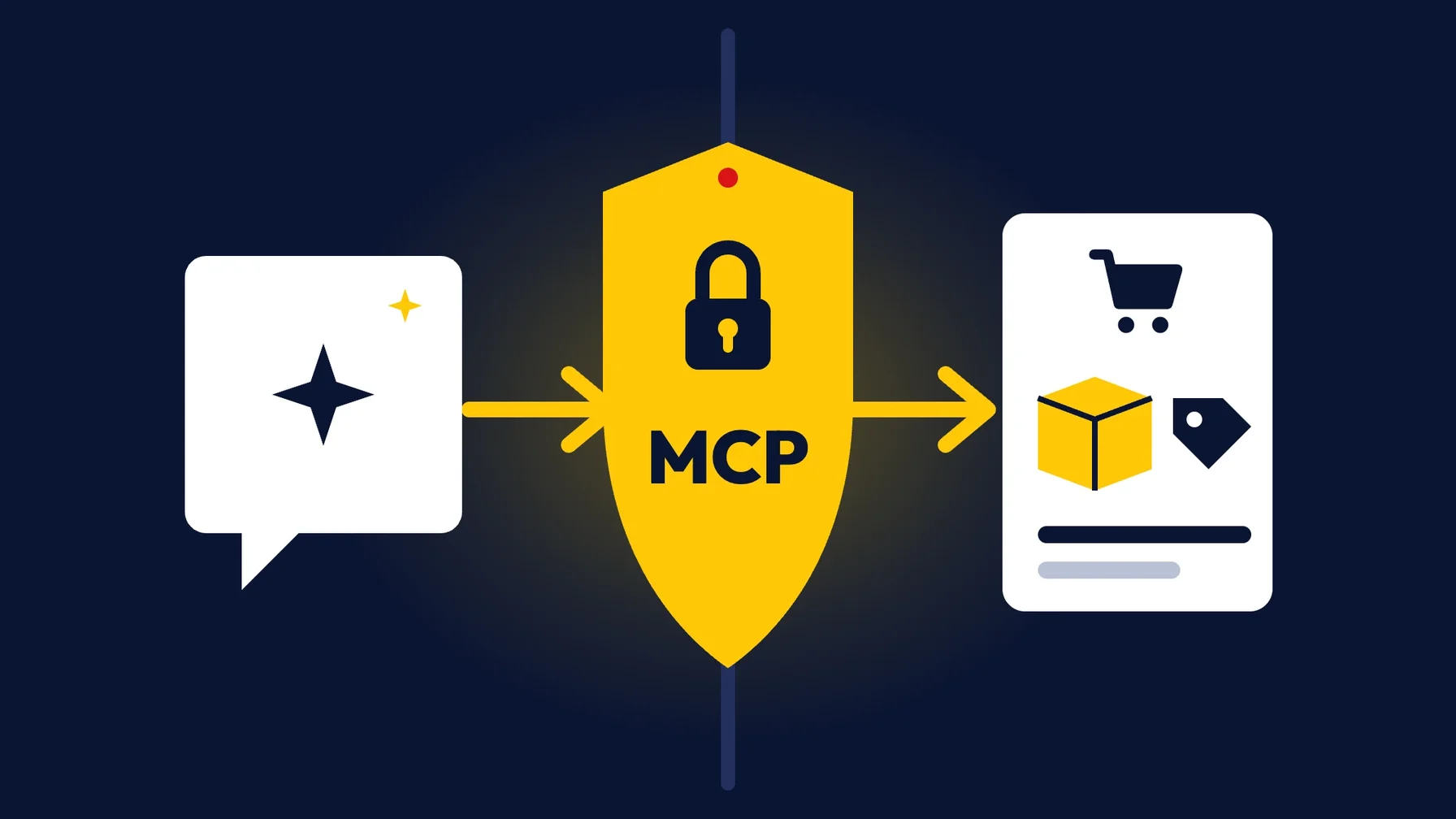
Important for security: according to commercetools, the AI assistant can only access the MCP server, not the API directly. You can limit tools to what's needed, filter fields and allow read-only access.
Use cases
Internal assistants: employees ask about orders, stock or product data in natural language instead of building reports.
Customer service: an AI assistant checks order status or explains delivery terms based on real data.
Development: developer teams use AI tools to inspect and test project data faster.
Agentic commerce: AI agents search and compare products and, where permitted, create carts or orders.
The catch: the more write permissions an agent has, the higher the risk. Start with read-only access and clearly defined tasks.
What this means for your team
AI agents are a new channel. Like any channel, they need rules: which data can they see, which actions can they take, and who monitors them?
Data quality matters too. An agent can only advise as well as your product data is complete and structured.
Our recommendation: set up a dedicated MCP server for each use case, with exactly the tools it needs. For anything customer-facing, test read-only first, then enable actions step by step.
How to connect AI agents to commercetools
Pick a use case. Start with a clear scenario, such as an internal assistant for orders.
Configure the MCP server. Enable only the tools you need and filter sensitive fields.
Choose authentication. Machine access for agents, or user-based access limited to that person's permissions.
Test and monitor. Review usage and tighten limits.
Check data quality. Complete your product data so agents understand it correctly.
Conclusion: Commerce MCP makes commercetools agent-ready
With Commerce MCP and Managed MCP Servers, you can connect commercetools to AI assistants and agents in a controlled way. That opens up new use cases, from internal assistants to agentic commerce.
What matters most: clear permissions, limited tools and good product data.
We explain how AI agents are changing shopping on our agentic commerce page. As a commercetools agency, we connect new channels like AI agents via Commerce MCP.
Frequently asked questions
What is Commerce MCP?
Commerce MCP is an MCP server by commercetools that lets AI tools work with a commercetools project using natural language. It provides tools for products, carts, orders, customers and other areas.
What are Managed MCP Servers?
Managed MCP Servers are the commercetools-operated version of Commerce MCP. They're configured in the Merchant Center and, according to commercetools, have been generally available since 16 July 2026.
Is AI agent access to commercetools secure?
commercetools provides several safeguards: the assistant only accesses the MCP server, not the API directly. Tools can be limited, fields filtered and access restricted to read-only.
What is the Model Context Protocol?
The Model Context Protocol is an open standard that lets AI applications access external tools and data. MCP servers provide defined tools for this.