Data Intelligence in E-Commerce: lots of data, no direction?

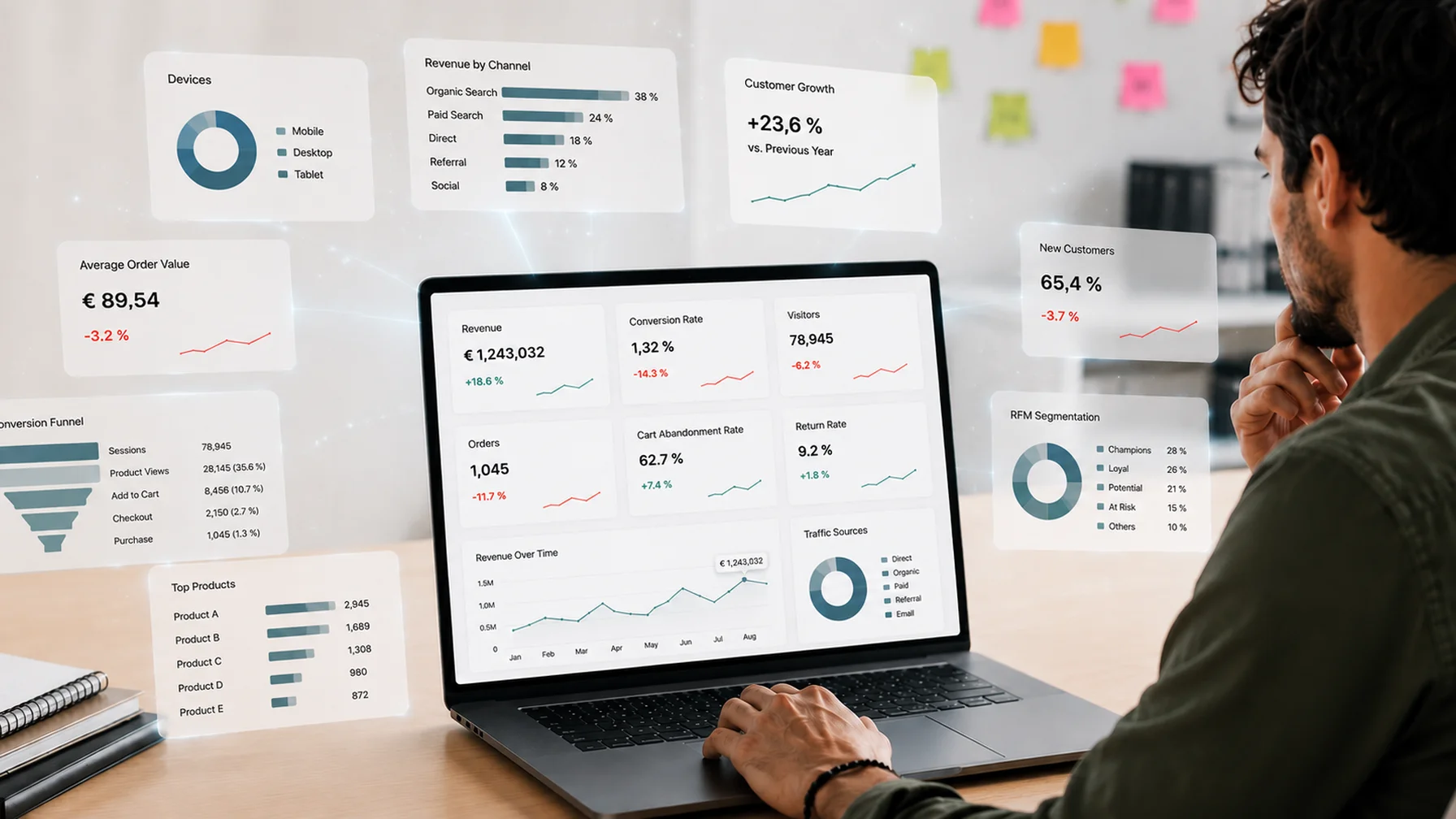
Data Intelligence in e-commerce turns full dashboards into clear decisions. Three everyday scenes, and how your data becomes real levers within 90 days.
Friday afternoon, numbers review. The charts point up, everyone nods — and you still leave with the same feeling as last week: things are working. But where do we push next?
That gap between "we measure everything" and "we know what to do" is where Data Intelligence in e-commerce begins. And the best starting point usually isn't a new tool. It's someone who reads your data, listens, and asks the right questions.
What this article covers
Why full dashboards can still mean flying blind
What sets Data Intelligence apart from classic Business Intelligence
Three everyday scenes you'll probably recognise
How data turns into concrete levers within 90 days
Revenue grows. Complexity explodes.
Sound familiar? Business is good, the numbers climb — and daily operations still get messier every month. Dashboards multiply. Alignment slips. Every department brings its own version of the truth into the meeting, and you end up debating numbers instead of making decisions.
The problem isn't your data. It's the missing direction. Three scenes from real shop life — see if one of them fits.
Scene 1: More revenue, same margin
Revenue is up, applause in the quarterly review. But your acquisition costs climb faster. You push more traffic, run more campaigns, list more products. By year-end, barely more is left than twelve months ago.
"Invest more" bought you growth, but not margin. So the real question becomes: which lever genuinely improves your unit economics, and which one only adds cost?
Scene 2: Teams pulling in different directions
Marketing promotes an item that's nearly sold out. Content tells a different story than the ads. And the data behind it sits in three silos that contradict each other.
Everyone works hard, just not in the same direction. That's not a people problem, it's a steering problem: without a shared data base, growth fragments.
Scene 3: Are you optimising — or guessing?
Feature live. Redesign shipped. Campaign launched. And then? The numbers wobble, but no one can say whether it was the change or the weather.
The polite name for this is "opinion-based development." Every decision becomes a small gamble, and gambling doesn't scale. What's missing is clean testing that shows what actually works.
What Data Intelligence in e-commerce does differently from BI
Quick definition: Business Intelligence shows what happened. It collects and visualises metrics — useful, but backward-looking.
Data Intelligence goes further. It connects the same performance data to your business goals and answers the question that really counts in the meeting: what do we do next? The focus is on the decision that follows the number.
Dashboards show figures but trigger no action. Data without a plan stays an expensive distraction. Data Intelligence filters the noise and turns your metrics into concrete steps: less searching, more doing.
Numbers don't lie — but they do stay quiet
A high click rate looks like engagement. Sometimes it's the opposite: users bounce between listings and product pages because they can't find what they want. A "good" number becomes a warning sign, but only if someone looks behind it.
That's where an outside view helps. Your dashboard shows your own trajectory. It doesn't show where you stand against the competition. That context turns "feels good" into a defensible "is genuinely good in the market."
From noise to direction in 90 days
Here's what the path looks like: three steps, no endless report loops.
1. Silent audit. We plug straight into your systems and analyse operations, tech setup and data flows on our own. Inconsistencies, attribution gaps, structural weaknesses, without slowing your teams down. The result: a reliable picture of reality you can finally trust.
2. Clear levers. No list of 100 optimisations. We name the three levers that will move your business in the next 90 days and turn them into a playbook: prioritised, measurable, doable.
3. Pilot. Data only has value when it steers decisions. So we stay on board, with regular reviews, sparring, and course corrections when the market or performance shifts.
What you can do today
Take honest stock. Does your last report lead to prioritised actions with owners, or to another discussion?
Create one source of truth. As long as each department uses its own numbers, you lose time aligning instead of executing.
Ask "why" behind every metric. A number without context is not a basis for decisions.
Prioritise ruthlessly. Three actions shipped beat thirty planned.
Make everything measurable. Every action needs a goal and a date. Without that, even the best report stays theory.
Conclusion
Data Intelligence in e-commerce isn't another dashboard. It's the step from watching to steering. The bottleneck is rarely the amount of data. It's the missing translation into priorities.
For companies, that's strategic, because the easiest growth path — more budget into the same channel — keeps getting more expensive. Knowing the right levers means growing in a more controlled way, with better margins.
And the start doesn't have to be big. Often an honest first look is enough: do your numbers actually trigger decisions? We listen first, then recommend.
Curious whether this fits your shop?
Not sure if a report like this even makes sense for you? Need more information? Then check it out here and book a consultation.
FAQ
What is Data Intelligence in e-commerce?
Data Intelligence in e-commerce connects your shop's performance data with your business goals and turns it into concrete, prioritised actions. It's not about displaying metrics; it's about deriving decisions and making their impact measurable.
How is Data Intelligence different from Business Intelligence?
Business Intelligence answers "what happened?" and looks back. Data Intelligence answers "what do we do now?" and looks ahead to the next decision. BI is the foundation; Data Intelligence is the step toward steering.
We already have dashboards. Why isn't that enough?
Dashboards show status but rarely trigger action. When every department uses its own figures and reports lead to debate instead of decisions, the steering logic is missing despite full dashboards, and that's what Data Intelligence provides.
How fast will I see results?
After a structured audit, the most important levers can usually be named within a few weeks and turned into a 90-day plan. What matters isn't speed at any cost, but that every action has a goal and a date.
Is this only relevant for big brands?
No. The value depends not on company size but on whether growth decisions are made on data. Smaller shops benefit too, as soon as several channels, teams or data sources come together.